
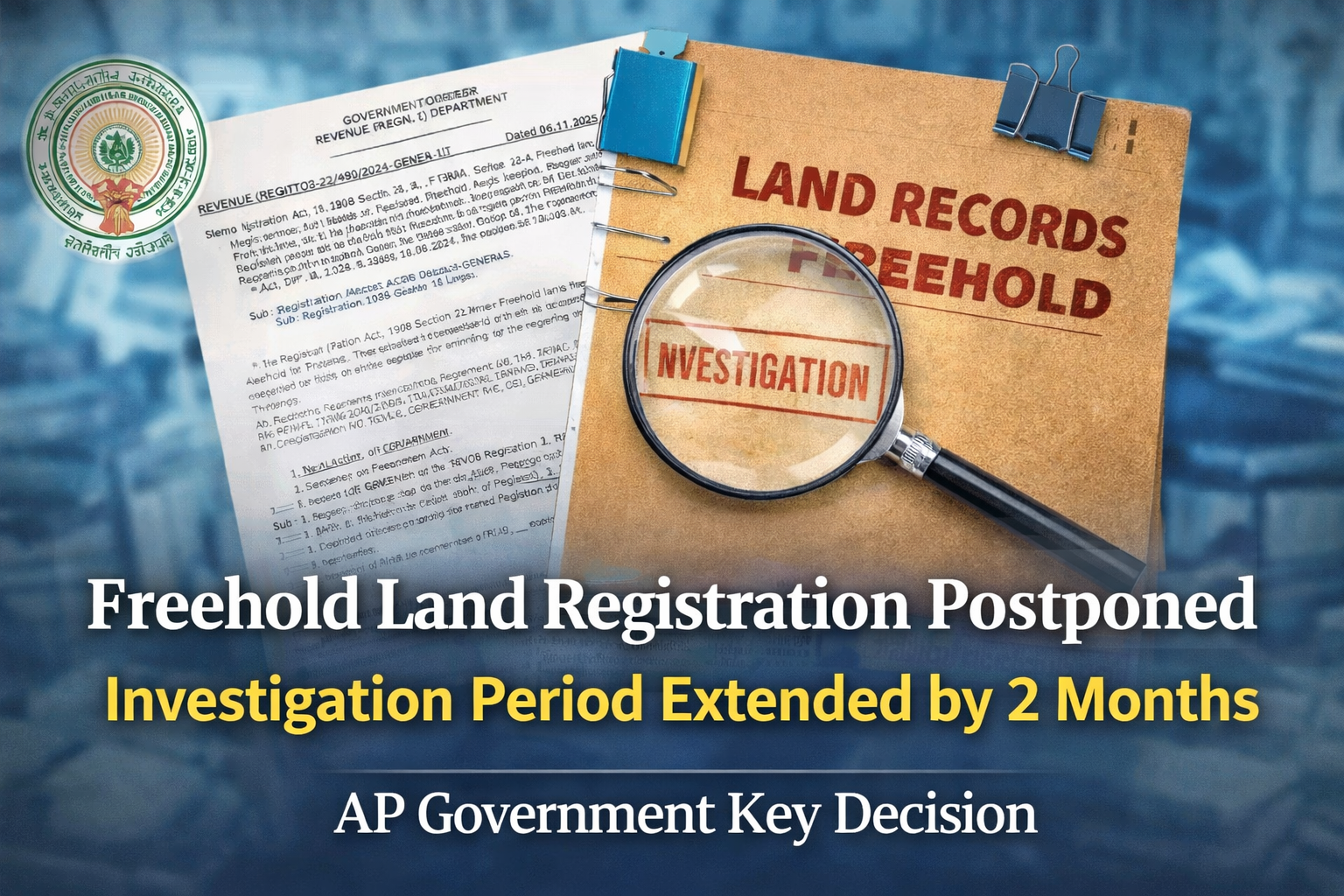
The Government of Andhra Pradesh has taken another significant decision concerning freehold lands. The ongoing enquiry period has been extended by an additional month. According to Memo No. REVO8-22/490/2024-GENERAL-IGRS-111 dated 09-02-2026, released by the Revenue (Registration-1) Department, important guidelines have been issued regarding the registration of freehold lands. The primary objective of this memo is to examine the legality, transparency, and authenticity involved in the process of converting lands into freehold status.
Key Highlights of the Memo
- Temporary suspension of freehold land registrations under Section 22-A of the Registration Act, 1908.
- Documents related to freehold lands will be kept pending without assigning regular registration numbers.
- Orders issued to conduct a comprehensive enquiry into the legality of land conversions and suspicious activities such as land grabbing.
- Precautionary measures to ensure that third-party interests do not arise until the enquiry is completed.
- Extension of Deadline: The enquiry period has already been extended multiple times through earlier memos. However, as complete reports were not received by the government, the deadline has now been extended by another month with instructions to expedite the investigation process.
- Instructions to Officials: District Collectors, Deputy Inspector Generals, District Registrars, Sub-Registrars, the Chief Commissioner of Land Administration, and the Inspector General of Registration & Stamps have been directed to complete the enquiry and submit compliance reports to the government.
Impact on the Public
This decision may cause temporary delays in the buying and selling of freehold lands. However, the core intentions behind the move include:
- Preventing land encroachments
- Curbing fake and forged documents
- Protecting rightful ownership of land
- Establishing a transparent registration system
Overall, this step by the Andhra Pradesh Government is viewed as a crucial effort to enhance transparency in land administration, control illegal conversions, and safeguard genuine ownership rights. With the implementation of this memo, the land registration system is expected to become more structured and reliable in the future.
What Are Freehold Lands?
In recent years, the term “Freehold” has been widely heard in land-related matters across Andhra Pradesh. With the release of government memos, investigations, and temporary registration suspensions, the concept has gained increased importance. This article provides a comprehensive understanding of what freehold means, its origin, advantages, disadvantages, the need for re-verification, and the latest government actions.
Meaning of Freehold:-
A Freehold refers to converting land or property from government or lease-based rights into complete private ownership. Once converted, the owner gains full legal rights over the land, including selling, transferring, or passing it on through inheritance. Typically, lands that were earlier under lease or assignment categories are converted into freehold status under certain conditions and regulations.
History of Freehold in Andhra Pradesh
The freehold policy gained prominence in the state over the past decade. During previous administrations, approximately between 2018 and 2022, decisions were taken to convert lease and assigned lands into freehold status. Numerous applications were received, and approvals were granted in certain regions. However, differences in implementation across areas and allegations of inadequate document verification led to controversies.
Advantages of Freehold Lands
- Complete ownership rights and absolute control over the property
- Easier access to bank loans and financial assistance
- Increased market value of property
- Clear inheritance and family transfer rights
Disadvantages and Risks of Freehold Conversion
- Possibility of forged or fraudulent documents
- Illegal conversion of government or poor people’s lands
- Increase in legal disputes and court cases
- Potential revenue loss to the government due to improper verification
How Did the Freehold Process Work?
- The applicant submits an application to the Revenue Department.
- Land records are verified at the Tahsildar or RDO level.
- If eligibility is confirmed, a freehold order is issued.
- Registration is then completed through the Registration Department.
Why Did Re-Verification Become Necessary?
Over time, several complaints emerged, prompting the government to initiate re-verification. Major reasons include:
- Absence of original lease documents
- Incorrect classification of land nature such as Assigned or Government Land
- Allegations of land grabbing
Developments After the Change in Government
After the new administration assumed office, a comprehensive enquiry into freehold orders was initiated. Registrations were temporarily kept pending. District officials were instructed to submit detailed reports. Enquiry deadlines were extended multiple times, with a recent extension of one more month.
Why Was the Enquiry Initiated?
- To confirm legal validity
- To prevent fake or illegal conversions
- To protect government lands
- To safeguard citizens’ ownership rights
- To reduce future legal disputes
Latest Status
Currently, registrations of freehold lands are being kept pending without regular numbering. Detailed district-level verification is ongoing. A final decision is expected once the government receives complete reports.
Although the freehold policy has the potential to strengthen property rights for citizens, the absence of proper regulation can lead to misuse and legal complications. Therefore, the government is presently focusing on transparency through systematic inquiry. With clear guidelines in the future, the freehold system is expected to become more structured and credible.
How Can the Freehold Land Issue Be Resolved? (Editorial Opinion)
To effectively resolve the freehold land issue, it is essential for the government to establish an independent and politically neutral mechanism. Appointing special officers in every district and conducting phased, comprehensive verification could be a practical and long-term solution.
Suggested Implementation Framework
- Record Verification Stage: Examine all revenue records, old pattas, lease and assignment documents thoroughly. Cross-verify online and offline data to ensure authenticity.
- Physical Site Inspection: A special officer or designated team should visit the land to verify actual possession and cultivation status.
- Cultivation Confirmation: Confirm whether the applicant has genuinely cultivated the land over the years through crop records, electricity connections, and water usage evidence.
- Committee Decision: Form an independent district-level committee to take final decisions based on submitted reports, ensuring transparency.
- Grant of Full Rights: Provide complete ownership rights to genuine beneficiaries and reject ineligible cases.
- Digital Record Update: Immediately update final decisions on a public digital portal for transparency and accessibility.
Expected Benefits:
- Reduction in political influence
- Justice for genuine farmers
- Decrease in forged documents and land encroachments
- Increased public trust in government
- Fewer legal disputes in the future
In conclusion, appointing special officers, adopting phased verification, committee-based decision-making, and ensuring digital transparency together can provide a fair, lawful, and sustainable solution to the freehold land issue.
Convert this article into Telugu
-Citizenmitra